

When I built my first square foot garden, I knew I wanted to start home composting immediately. I had to purchase compost as part of the recipe for the perfect raised bed garden soil mix, and I felt silly paying to cart someone else’s rotted organic matter home.
Every time I threw my fruit and veggie waste in the trash, I felt like I was wasting future compost – but I didn’t want to take the time and effort and money to build the wood and wire compost bins described in the Square Foot Garden book. What can I say? I’m impatient – and cheap!
For less than $20, I snagged a large plastic storage bin at Target. Knowing that the key to successful composting is not only damp and dark conditions, but also airflow, I used a very large drill bit to drill holes on the top, bottom, and sides of the container.
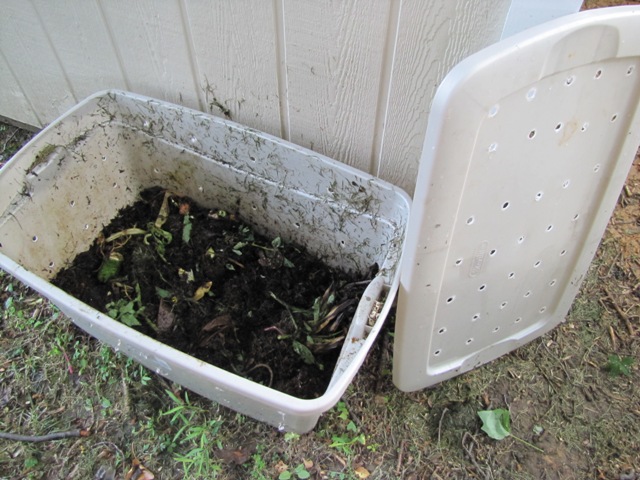
During the coming week, as I started filling my compost bin with my kitchen scraps, I noticed that I had plenty of good green waste to get started but was lacking the brown stuff. (To create ideal composting conditions you should have a fairly balanced mix of “green” and “brown” ingredients.) In addition to kitchen scraps, you want to have fairly equal proportions of brown and green matter too. Examples of good brown stuff: leaves, cardboard, tea bags, unbleached coffee filters, sawdust. Examples of good green stuff: veggies and fruits, grass clippings, coffee grounds, plant trimmings.
I racked my brain for ideas of cheap or free “brown stuff” and found several solutions in the pet aisle of my local grocery. Swheat Scoop and Feline Pine, both all-natural cat litters that I have used in the past, would work. Feline Pine is simply very fine pine chips. Swheat Scoop is a byproduct of wheat processing. But then I spied a huge bag of pine shavings for a hamster cage – for only $5. Sold!
I took my pine shavings home and emptied the whole bag into the compost bin, mixing it well and adding some water to moisten it. I gave everything a good stir with my pitchfork, ensuring that the moistened pine got well mixed with the rotting kitchen compost scraps.
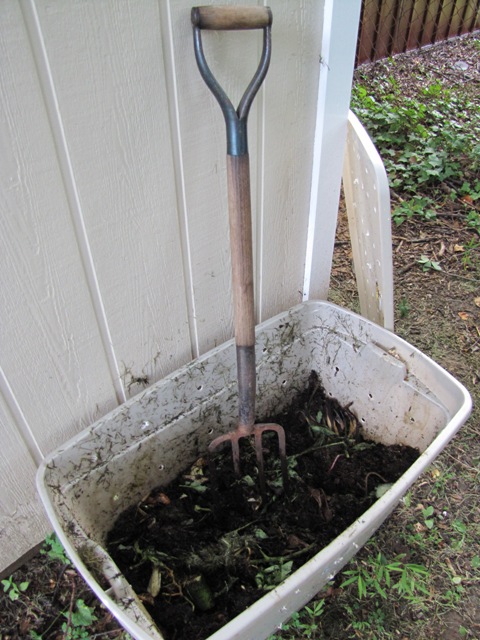
How do I maintain it? Almost every day I take my kitchen scraps and dump them into the bin, then give all the compost a good mix with the pitchfork. It seems that a daily mix makes for the quickest composting, as it helps move air around to promote the breakdown of the organic matter. I’m about 3 weeks into it, and I’ve got some good compost ready to sprinkle on my gardens.
Random thought: I’m not sure why some places specifically call their compost “organic compost” – isn’t it all organic matter that has broken down without chemicals? Regardless, I know that my compost is, because waste from organic fruits and veggies = organic compost.
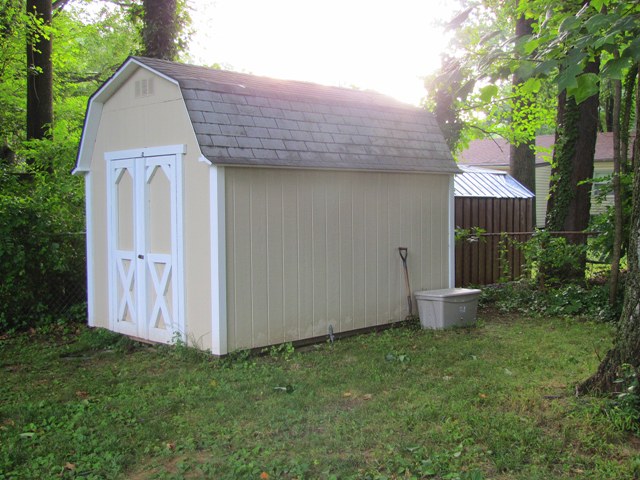
Style tip: A plastic bin isn’t the prettiest thing to rest your eyes in, but since I chose a neutral color, the compost bin sits right by my shed without sticking out like an eyesore. And because that bin is portable, I could easily drag it behind the shed if I didn’t want guests to see it. And when I say “easily drag it,” I mean I could easily ask Ryan to move it.
 What do you think? Are you ready to try some at-home composting? It really is this easy. $20 and 15 minutes of my time got me a totally functional compost bin. In the land of home improvement, it doesn’t get much easier than that!
Because of the flexibility and portability of the square foot garden, it’s never too late to start your own, and it’s perfect for renters. You can read about the installation of my first gardens here and here.
And if you want to get gardening, or just are curious about the method, pick up your own copy of All New Square Foot Gardening: Grow More in Less Space!


10 Comments
Thanks for this Jane! I didn’t want to spend much $ to get a compost bin, this sounds like a perfect solution. Hop Auburn village doesn’t have ordinances against random bins on my step 🙂
I’ve always wanted to do a compost bin, but I don’t think it would work where we live now, because we wouldn’t be able to move the bin far enough away from the house to avoid the rotting smell. (Does it stink?)
Wonderful post! I have been wanting to compost for a while, but as we live in a city apartment with no yard, garden, plants, etc. I guess we have no need 🙁 My in-laws have an incredible compost system going on, and incredible garden to prove it!
Great plan! Hubs and I were contemplating springing for a (surely wickedly overpriced) contraption for composting. We live in the city, and although we have a comfortable backyard, we didn’t want to deal with the possible pests and smells for our neighbor’s sake. This is great, and for a $20 investment, even if all goes bad, we’ll still have a pretty functional bin!
ps: love your square foot gardens too! 🙂
I’m pretty sure that some places advertise “organic compost” because they only put organically grown vegetables into the compost. That way, there are no residual chemicals in their compost. In the same vein, they probably only add paper printed with soy inks and fabrics like organic cotton and organic wool. Just a thought.
I’ve had a square foot garden for a few years now and know exactly how you felt about throwing away green kitchen scraps! I hate the idea of spending $100 for a compost bin, so I just bought a plastic storage bin for $8 and am in the process of drilling holes in it. Thank you for the information in your article.
Oh, so glad this was helpful for you! Good luck with your compost bin! Also, a quick sidenote – I actually think it would be helpful to have two because of size – one that can sit and really compost and be usable, and one that has the fresher scraps that are still decomposing. So I’m planning to add another one just as soon as I get motivated 🙂
I just made a slightly smaller version of this. I keep my scraps in the freezer for a few days at a time before dumping them in. I had only layered and watered and not mixed for first few days. I added and mixed for the first time today and a few hours later the bin was surrounded by black flies! Help!
Hi Tara, I have switched to a larger, tumbling composter – but I get a lot of flies too when it gets too wet (like after a lot of rain). I find that mixing in shredded paper, torn brown paper shopping bags, or leaves helps – and keeping it on the drier side does too.
[…] Setting up an easy compost bin […]